

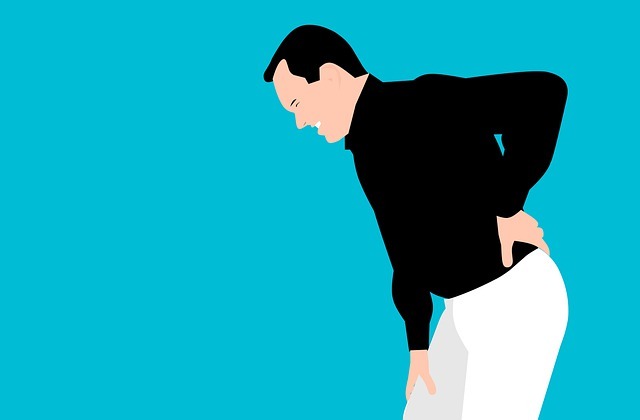
What is sciatica?
Sciatica occurs when the “sciatic nerve”, which runs from your lower back into your buttock, down the back of your leg and into your foot is irritated, inflammed or compressed. The sciatic nerve is the longest and thickest nerve in the body- made up of five nerve roots- two from the lower back region called the lumbar spine, and three from the final section of the spine called the “the sacrum”. The five nerve roots come together to form a right and left sciatic nerve. On each side of your body, one sciatic nerve runs through your hips, buttocks and down the back of the thigh, ending just below the knee. The sciatic nerve then branches into other nerves which continue down your leg and into your feet and toes.
Sciatica is commonly used to describe any pain that originates in the low back and radiates down the leg. There may be some low back pain when you experience sciatica, but often the leg pain feels worse than the back pain. It can also cause muscle weakness, numbness and pins and needles in your leg, foot and toes.
What does sciatica feel like?
It can feel different in each person, depending on the cause of the nerve pain, but can be described as sharp, shooting, stabbing, burning or electric. Pain can be constant or come and go, often made worse by prolonged periods in one position and sudden movements such as coughing and sneezing. Sciatica usually only affects one leg at a time, but it can occur in both legs depending on where the nerve is being pinched.
Causes of sciatica:
– A lumbar disc herniation: (also known as a slipped disc): when some of the gel inside the shock absorber pads in your low back compresses the nerve adjacent to it
– Spinal stenosis: narrowing of the part of your spine where the nerves pass through- often due to wear and tear changes.
– Degenerative disc and joint disease: (osteoarthritis) natural wear and tear of the discs between the vertebra and thickening of the openings (intervertebral foramen) for the nerves with extra bone that forms (spiky bone spurs known as osteophytes) decreases the space available for the nerves to pass into our legs and pinches the sciatic nerve roots as they leave the spine
– Spondylolisthesis: when there is a change in position of one of the bones in your low back (vertebra) so that it is out of line with the other above it, narrowing the opening through which the nerve exits, pinching the sciatic nerve.
– A back injury: causing trauma to the lumbar spine and sciatic nerve.
– Piriformis syndrome-: condition that develops when the piriformis muscle (a small strap like muscle that runs from the sacrum to our hip on our buttock) becomes very tight and spams and can put pressure on the sciatic nerve and irritates it.
– Cauda equina syndrome– is a rare but very serious medical condition that is a medical emergency. The small bundle of nerves at the base of our spine is known as the “cauda equina”, Latin for “horses tail”. When these nerves become pinched (usually by a large disc herniation) it causes pain into the leg, numbness around the saddle area (buttocks, anus and genitals) and can affect the strength into our legs and loss of bowel and bladder control. Thankfully it is very rare and your Chiropractor will always ask you if you are experiencing any signs or symptoms that may relate to this.
What checks and tests are used to diagnose sciatica?
Your Chiropractor will carry out a full medical history and ask about your current symptoms. A thorough physical examination will include gait analysis (including heel and toe walk), orthopaedic tests (the straight leg raise test is especially useful in sciatic analysis) and a neurological examination which will include the assessment of your reflexes and the muscle strength in your legs to see how the nerve function to these areas is being affected.
In some cases it may be necessary to carry out further imaging such as X-rays of your lumbar spine and an MRI scan may be indicated if a lumbar disc herniation (slipped disc) is suspected. X-rays will only show the skeleton but MRI scans will show the soft tissues around the spine as well as the vertebra.
How does your chiropractor treat sciatica?
The initial goals of treatment are to decrease your pain and increase your mobility. In severe cases your Chiropractor may send a report to your GP to let them know about your condition and to arrange them to prescribe medication to help with your pain and inflammation which can be very helpful to manage your symptoms whilst treatment commences.
Your Chiropractor may use a variety of techniques to treat you including gentle joint mobilisation, massage, acupuncture and exercises to help you at home.
Most cases resolve in 4-6 weeks but some persistent cases may last much longer without treatment. If you don’t improve with treatment, which is rare, your Chiropractor will help you with further steps to help with your recovery. This may include a referral to a recommended spinal consultant who may arrange an MRI scan for you.
Other treatments for sciatica (thankfully not often required once you have seen your Chiropractor)
– Painkilling injections- an injection of a corticosteroid- an anti-inflammatory medicine into the low back may help to reduce pain and swelling around the affected nerve roots. Injections may provide short term pain relief to provide a window of time with decreased pain to carry out physical therapy and home exercises.
– Surgery- this is not usually recommended unless your symptoms have not improved with other treatment methods such as medication, physical therapy or injections. Symptoms that may require surgery include severe pain which prevents you from performing every day activities, severe weakness in your leg muscles and loss of bowel or bladder control. The goal of spinal surgery is to remove the pressure on the nerves that are being pinched and to make sure that the spine is stable.
Dos and Don’ts To Help To Manage Sciatica At Home:
Do’s:
– Carry on with your normal activities as much as possible.
– Try and keep moving
– Use ice on the worst affected area for up to 10 mins (can repeat hourly)
– Ask your pharmacist or GP about pain killers
– Try a pillow between your knees if lying on your side at night or under your knees if lying on your back, it can also be helpful to use a slim cushion in the small of your back when sitting.
– Use an ice pack on your low back- even if you have leg pain- this will help reduce the inflammation at the source of the pain, at the nerve root- 10-15 minutes wrapped in a T-towel, you can repeat this hourly if needed.
Don’ts :
– Try not to sit or lie down for long periods, even if moving hurts, it’s not harmful and can help you to get better faster.
– Do not use a hot water bottle to ease the pain, it might feel comforting but may scald your skin and aggravate the underlying inflammation.
– Panic- try to breath through the spasms as this will help the blood flow and oxygen to the area and help you to relax.
When to seek immediate medical care with sciatica if you:
– Have weakness or numbness in both legs that is severe or getting worse.
How to reduce the chances of sciatica returning:
– Keep up your regular appointments with and keep on track with your home exercises