

[ Newbury Chiropractor ]
Sciatica
What is sciatica?
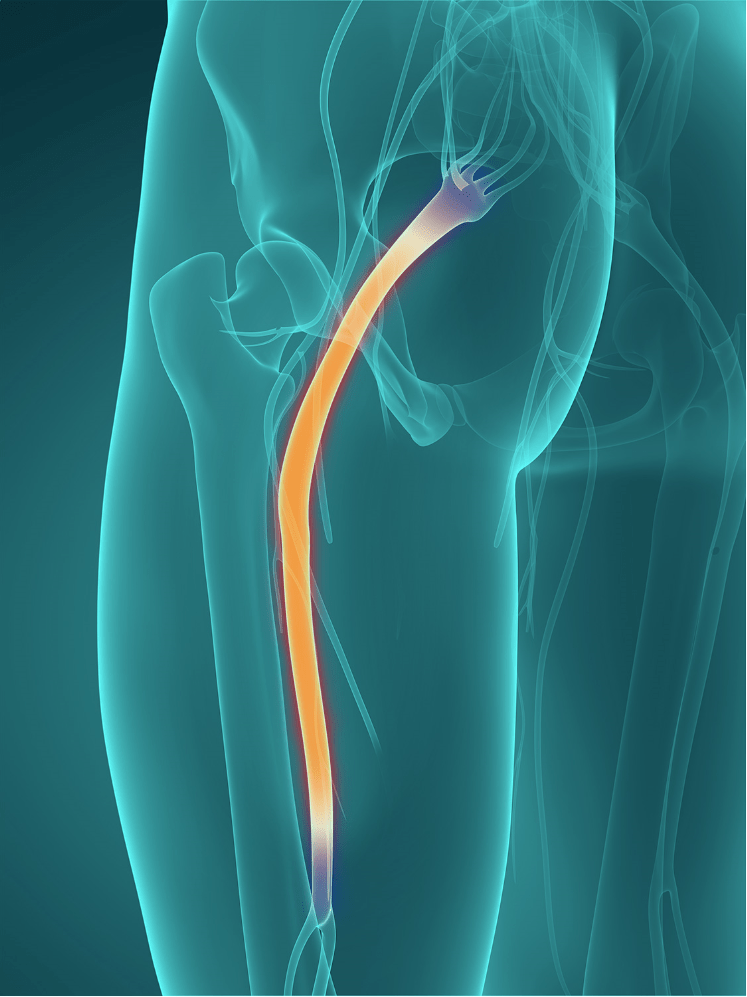
Sciatica is the term used to describe pain that travels into the buttock, leg or foot as a result of irritation of structures in the lower back. The name comes from the sciatic nerve, which is the largest nerve in the body and runs from the lower back down the back of each leg.
Many people assume that sciatica is always caused by a slipped disc, but this is not the case. Whilst disc injuries can cause sciatica, symptoms can also arise from irritation of the joints, muscles, ligaments and nerves in the lower back.
Sciatica can range from a mild ache to severe pain and may significantly affect walking, sitting, sleeping and everyday activities.
What causes sciatica?
Referred pain sciatica
This occurs when structures in the lower back, such as muscles, joints or ligaments, refer pain into the buttock or leg.
Symptoms typically include:
- Aching or sharp leg pain
- Lower back pain that is often worse than the leg pain
- Symptoms that may vary with movement and activity
- No numbness, tingling or muscle weakness
Nerve-related (neurogenic) sciatica
This occurs when a spinal nerve becomes irritated or compressed, often due to a disc injury or inflammation around the nerve.
Symptoms may include:
- Sharp, burning or shooting pain
- Pain travelling below the knee
- Pins and needles
- Numbness
- Muscle weakness
- Leg pain that is often worse than the back pain
Accurately identifying which type of sciatica is present is essential to ensuring the most appropriate treatment.
How does referred pain occur?
Referred pain happens when nerve fibres from different parts of the body happen to meet in the same area of the spinal cord. The brain may misinterpret the nerve signals it receives and so a problem in one area of the body is perceived as pain in another area.
Treatment of sciatica
First of all, an accurate diagnosis must be made. An examination, which includes neurological testing, can find out the cause of your leg pain and so determine the most appropriate treatment.
The first step in the treatment is to minimise any further injury, your chiropractor or ostoepath will advise you what activites to avoid and what stretches may be appropriate. Restoring function with manual treatments (Santilli et al, 2006) and dealing with the inflammation, usually by using ice-packs are the most important things to do to get you back on your feet. Once you have reached a certain level of improvement, your clinician can help you with an appropriate rehabilitation exercise programme.
Your clinician will discuss with you the frequency of visits required for treatment. The healing process takes time and varies from person to person, often depending on the severity of the condition and the history of the complaint. However, how active you are in your own treatment will influence your recovery time.
Surgery should be a last resort but is very rarely necessary if symptoms are persistent and severe, but note that any changes in your bowel or bladder control, or numbness in the ‘saddle’ area may be a sign of Cauda Equina syndrome, a serious condition for which you should seek medical attention from your local A&E department without delay.
Ref: Santilli et al (2006) Spine J. Mar-Apr; 6(2):131-7

How can chiropractic help?
At Newbury Chiropractic Centre, our chiropractors have extensive experience in assessing and treating sciatica and lower back conditions.
Your chiropractor will carry out a thorough consultation and examination, including neurological testing where appropriate, to identify the cause of your symptoms and determine the most effective treatment plan.
Treatment may include:
What else can you do?
Remaining active within comfortable limits is often one of the most important factors in recovery. Whilst short periods of rest may be appropriate, prolonged inactivity can sometimes delay healing.
As your symptoms improve, we will guide you through a personalised rehabilitation programme designed to restore strength, flexibility and confidence in movement while helping to reduce the risk of future episodes.


When should I seek urgent medical attention?
Although most cases of sciatica respond well to conservative treatment, urgent medical assessment is required if you experience any of the following symptoms:
These symptoms may indicate a rare but serious condition called Cauda Equina Syndrome and require immediate assessment at your local Accident & Emergency department.
If you are suffering from sciatica, leg pain or lower back pain, our experienced team would be happy to assess your condition and discuss the most appropriate treatment options for you.
[ Contact us ]
You don't have to live your life in pain – arrange a consultation and see how we can help you
What our patients say